

The Real Math Behind Slot RTP (And Why It Matters)
Ask ten slot players what RTP means and you'll get ten vague answers. "It's the payout percentage." "Higher is better." "I only play 96% games." All technically true, and all missing the point. Return to Player is the single most misunderstood number in iGaming, and once you actually understand how it works, you'll look at game lobbies, bonus offers, and your own bankroll completely differently.
Let's cut through the noise. This isn't about telling you to stop playing slots. It's about giving you the information most players never bother to dig into.
What RTP Actually Measures
RTP is a theoretical figure calculated over millions of spins. A 96% RTP slot doesn't mean you'll get 96 euros back from every 100 you wagered in a session. It means that if the game ran for, say, ten billion spins, the total returned to players would hover near 96% of total wagered, with 4% retained by the house.
That's the long run. Your session is not the long run. Over 500 spins, variance stomps all over theoretical return. You can hit a 2,000x multiplier in twenty spins on a 94% game and walk away miles ahead, or grind a 97% game for two hours and lose your shirt. RTP doesn't predict your session. It describes the machine's DNA.
Where it gets genuinely useful is comparison. Over hundreds of sessions, high-RTP games leak value to the house more slowly. If you care about longevity rather than swing size, that number is your friend.
The RTP Range You'll Actually Encounter
Online slots typically fall between 94% and 97%. That 3% gap is enormous in practical terms. Here's the split you'll see in real lobbies: Further details are available through สล็อต.
- 97%+: Rare, usually from providers like NetEnt on specific classics (Blood Suckers sits around 98%) or Pragmatic Play's higher-configuration releases.
- 96%–96.9%: The sweet spot for most premium releases. Book of Dead hovers around 96.2%.
- 95%–95.9%: Mid-tier, extremely common.
- 94%–94.9%: Often "Deluxe" or jackpot versions where a slice of every bet feeds the pool. Mega Moolah sits near 88% before progressive contributions.
Notice that jackpot slots carry lower base RTP. That's not a scam; part of your stake is funding the prize pool. When you see 88% on a progressive, the missing 8% isn't evaporated. It's redirected into the jackpot. Whether that trade-off is worth it depends on whether you're chasing life-changing money or steady entertainment.
Why Table Games Beat Slots on Paper
If we're being honest about the math, slots are the worst value in the building. Compare:
- Blackjack (basic strategy): 99.5% RTP, or 0.5% house edge. Learn the chart and you're nearly even.
- Baccarat (banker bet): 98.94% RTP with a flat 5% commission on wins.
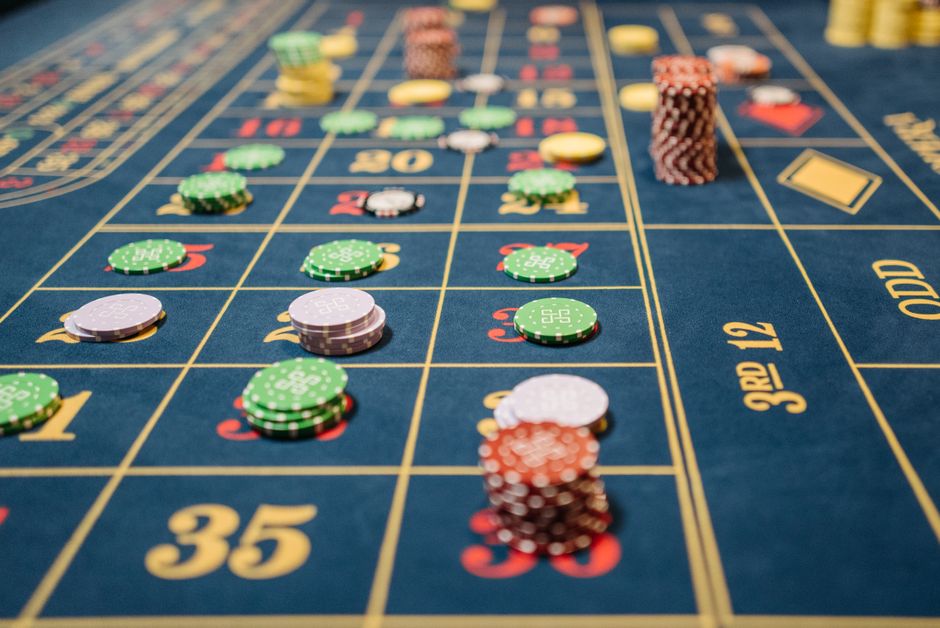
- European roulette: 97.3% RTP (single zero).
- American roulette: 94.74% RTP. That extra double-zero pocket costs you nearly 3%.
- Video poker (Jacks or Better, optimal play): 99.54% RTP.
Poker is the outlier here because you're playing against other people, not the house. The rake, usually 5% capped at a few euros per pot, is the only structural edge working against you. Skilled players beat the rake; weaker players fund it.
The lesson isn't "quit slots, play blackjack." It's that if you play everything, your money lasts dramatically longer at the tables, provided you've put in the work on strategy. A tourist playing blackjack badly is worse off than a slots player on autopilot.
Where the Casino Makes Its Real Money
Online casinos don't survive on a razor-thin 2% margin. They survive on volume. If a thousand players each cycle 100 euros through a 96% slot, that's 100,000 wagered and 4,000 retained. Scale that across thousands of players, dozens of games, and 365 days, and the operation is printing money.
This is why bonus terms matter so much. A 100% match bonus with 35x wagering on slots means you must cycle 3,500 euros before withdrawing. At 96% RTP, expected loss during wagering is roughly 140 euros, more than the bonus itself. That's not a rigged system; it's just how the math plays out. The bonus is designed to make you play longer, not to make you rich.
Smart players read the fine print. They check whether wagering counts 100% on slots but only 10% on blackjack, whether the max bet is capped at 5 euros, and whether the game list is blanketed with 94% RTP options. Those details decide whether a bonus is worth claiming at all.
Poker Rakeback and the Value of Not Playing Stupid
Cash-game poker players tend to obsess over rakeback, and rightly so. At micro stakes, rake can consume 5 to 10 big blinds per 100 hands. Rakeback deals, typically returning 20% to 40% of rake paid, can turn a break-even grinder into a profitable one. But here's the thing: no rakeback programme on earth saves a player who stacks off with top pair into a nit's check-raise on a wet board.
The maths is brutal but clarifying. Over 100,000 hands at €0.50/€1, a 3bb/100 winner who's actually a 1bb/100 winner pre-rake is running on rakeback fumes. Improve the decisions first, then optimise the deals. It's not glamorous advice, but it's the advice that pays.
What to Do With All This
You don't need to memorise RTP tables. You need a filter. Before you dive into a new slot, ask: what's the RTP, and is the volatility right for my bankroll? High-volatility 96% games eat small balances fast; low-volatility 95% games keep you playing longer with smaller wins. Neither is superior, but they suit different players.
If you're claiming bonuses, run the quick maths on wagering requirements before you deposit. If you're playing poker, treat rake as a permanent tax and structure your sessions around beating it, not avoiding it. And if you're gambling seriously, track your results. Feelings lie; spreadsheets don't.
The casino has the edge. That's the deal, and no strategy changes it entirely. What you can control is how fast you bleed, how much value you extract from bonuses and rakeback, and whether the way you play actually matches how you want the game to feel. RTP isn't a promise. It's a map. Reading it won't take you to the treasure, but it stops you walking off a cliff in the dark.


Memory Techniques
-
Replace passive rereading with question prompts, closed-book summaries and spaced tests that force your brain to retrieve information and expose weak spots.


Note-Taking




-

Long established fact that a reader will be distracted
-

Long established fact that a reader will be distracted
-

Long established fact that a reader will be distracted




Study Skills
Karla Gleichauf
12 May 2017 at 05:28 pm
On the other hand, we denounce with righteous indignation and dislike men who are so beguiled and demoralized by the charms of pleasure of the moment
M Shyamalan
12 May 2017 at 05:28 pm
On the other hand, we denounce with righteous indignation and dislike men who are so beguiled and demoralized by the charms of pleasure of the moment
Liz Montano
12 May 2017 at 05:28 pm
On the other hand, we denounce with righteous indignation and dislike men who are so beguiled and demoralized by the charms of pleasure of the moment