

How to Build a Memory Palace for Everyday Recall
Why your brain remembers places better than lists
Think back to your childhood home. You can probably picture the exact spot on the stairs where the carpet was loose, or the corner of the kitchen where the bin lived. Now try to recall the third item on a shopping list you wrote yesterday. Most of us struggle. That gap is the whole reason memory palaces work.
Your brain has spent decades building a detailed map of physical spaces. It files that information deeply, because knowing where things are once kept our ancestors alive. A memory palace — also called the method of loci — borrows that ancient spatial machinery and points it at whatever you need to remember: a presentation, a set of exam facts, a shopping list, or the names of twelve new colleagues.
The method is roughly two and a half thousand years old, and it still outperforms most modern study techniques because it forces you to encode information with imagery, movement and location rather than repetition.
Choose a route you could walk with your eyes shut
Your first palace should be somewhere you know so well that you never have to think about the layout. Good candidates include your home, your walk to the bus stop, your workplace, or a route around your local supermarket.
What matters is that the space is:
- Familiar — you can move through it without hesitating.
- Ordered — it has a natural sequence, such as front door, hallway, kitchen, stairs.
- Distinct — each stopping point looks different from the last, so images do not blur together.
- Quiet — you can walk it in your head in a few minutes without distraction.
Avoid somewhere you only half-remember, and avoid routes with long, identical corridors. Variety does the work for you.
Map your first ten stops
Start small. Ten locations is plenty for a beginner, and you can extend the route later. Pick your stops in a fixed order and always travel the same way round. If you use your front door as stop one and your bedroom as stop ten, do not decide halfway through to walk backwards.
Write your ten stops down on a card. For example: front door, shoe rack, hallway mirror, kitchen kettle, fridge, back door, garden shed, stairs, bathroom, bedroom window. Then walk through them mentally a couple of times until the sequence feels automatic. This is the scaffolding. The facts come next.
Images that stick: the stranger, the better
Now place one item at each stop. The trick is not to make tidy, sensible images. Grey, dull pictures fade within minutes. Make them vivid, ridiculous, moving and noisy.
Say you need to remember the five stages of a project: research, drafting, review, sign-off and launch. At your front door, imagine a detective on her knees examining the doormat with a magnifying glass — that is research. On the shoe rack, a giant fountain pen is scribbling over your trainers — drafting. In the hallway mirror, your own reflection is frowning and red-penning a document. At the kettle, a manager is stamping a form while steam blasts her face. On the fridge, a rocket is lifting off between the milk and the butter.
Notice what makes these work:
- Exaggerated size — objects far too big or small for the space.
- Movement and sound — steam, scribbling, a rocket roar.
- Emotion or absurdity — embarrassment and surprise are memorable.
- One image per location — cramming four facts into one stop causes confusion.
To recall the list, you simply walk the route in your head and read off what you see.
Using your palace for names, lists and study
Names are the classic everyday challenge. When you meet someone, repeat their name aloud, then link it to a distinctive feature using a vivid image. A new colleague called Mr Baker becomes a man with floury hands. A woman named Rose gets a single red rose tucked behind her ear. Place the image on their face, not floating in the room, and it will come back when you next see them.
For study, build a separate palace for each topic so the routes do not tangle. A history student might use the family home for the Tudors and a grandmother's house for the Stuarts. When revising, walk each palace in turn and say the content out loud. This is far more active than rereading notes, and it exposes gaps immediately — if a location is blank, you have not learned that point yet.
For presentations, ten stops give you ten talking points. Walk the route just before you stand up, and the sequence will carry you through without notes.
The five-minute review that does the heavy lifting
A memory palace is only as strong as the reviews you give it. The good news is that each review takes minutes, not hours. After you build a palace, walk it once the same evening, then again the next morning, then three days later, then a week later, then a month later. This spacing is what moves information into long-term recall.
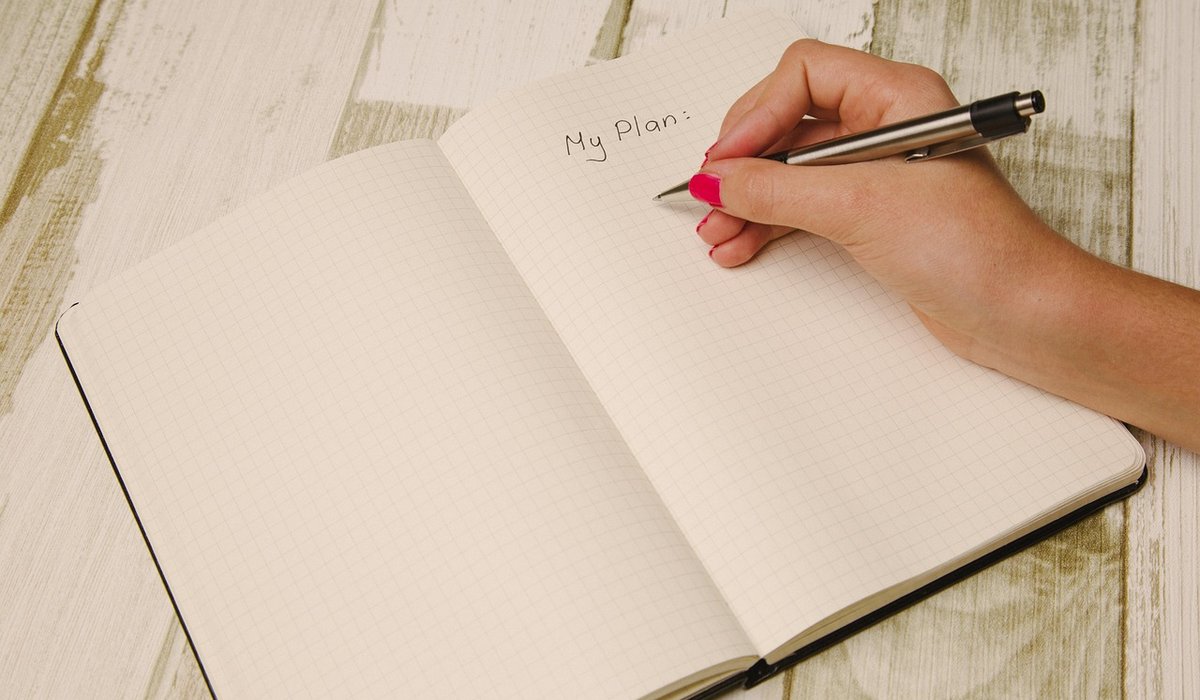
Keep a small notebook listing your palaces and their stops, so you know where everything lives. Review in spare moments: on the train, waiting for the kettle, walking the dog. If an image has faded, rebuild it bigger and stranger than before.
Two mistakes trip up most beginners. First, rushing: build one palace slowly and use it for a fortnight before adding another. Second, leaving images still and silent. Give them noise, colour and ridiculousness. Do that, and a walk round your own kitchen can hold more than a notebook — and it never gets lost.


Memory Techniques
-
Replace passive rereading with question prompts, closed-book summaries and spaced tests that force your brain to retrieve information and expose weak spots.

Note-Taking




-

Long established fact that a reader will be distracted
-

Long established fact that a reader will be distracted
-

Long established fact that a reader will be distracted



Study Skills
Karla Gleichauf
12 May 2017 at 05:28 pm
On the other hand, we denounce with righteous indignation and dislike men who are so beguiled and demoralized by the charms of pleasure of the moment
M Shyamalan
12 May 2017 at 05:28 pm
On the other hand, we denounce with righteous indignation and dislike men who are so beguiled and demoralized by the charms of pleasure of the moment
Liz Montano
12 May 2017 at 05:28 pm
On the other hand, we denounce with righteous indignation and dislike men who are so beguiled and demoralized by the charms of pleasure of the moment